We are expecting a hot dry summer. For a backyard gardener, that’s a problem. For an African small-scale farmer, it will be harder to grow enough food for the family. We have developed a new soil water sensor that helps smallholder farmers grow more food with less water. It’s called a Chameleon sensor — works like an artificial root — and talks to the farmer by colours. The Chameleon sensor has been proven to work in many countries in situations where other water-saving approaches have failed.
A soil scientist got tired of watching irrigation advice fail the moment it met a real farm. So he built a sensor that reports no number at all — it changes colour. That sensor went into the ground on smallholder farms in 20+ countries, and this summer it comes home to Australian gardens — and every kit sold here helps a new Malawian company put the Chameleon in the hands of smallholder farmers in Malawi who need it most.
Most soil sensors give you a number but — because every soil is different — a number does not tell you when to water. The Chameleon gives you a colour — blue, green or red — to show whether the plants are thirsty. Built for farmers who cannot afford to guess. This summer, in Australian backyards.
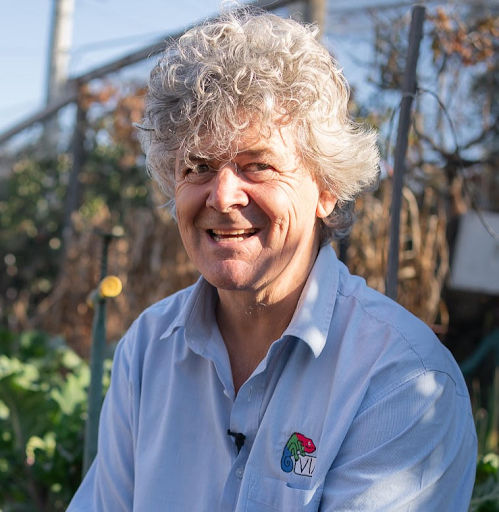
The Chameleon system came out of over ten years of research at CSIRO. It took us that long to develop an inexpensive but accurate sensor. Testing the system in Africa was funded by the Australian Centre for International Agricultural Research (ACIAR). In 2022 we started a not-for-profit enterprise called the Virtual Irrigation Academy. Our goal is to make first-world technology available to the farmers who need it most.
Our sensors have been piloted in many countries around the world. Piloting shows things work, but it does not change the lives of farmers. We have to go the next step of turning research into real benefits on the ground. This is what our Malawi campaign is all about.
Watch the video and see the incredible difference the Chameleon sensor has made for smallholder irrigators in Malawi.
The Chameleon was not built for backyards. It was built for smallholder irrigation farmers. But whether you are a big commercial irrigator, a backyard gardener or a smallholder in Africa, we all need to know when our plants need water.
Our research in Malawi started in 2015 and the Chameleon sensors made a huge difference: maize yields rose 90–330% and bean yields 150–170%, on less water than before. By 2022, VIA had worked on 60 irrigation schemes.
Our R&D projects ended in 2023 and most of these farmers — earning less than $5 per day — cannot afford a kit on their own. Old sensors need to be replaced and many new farmers want to join. This is why we now need your help.
A new Malawian company has been set up to carry the work on. Getting this local company on its feet is what this summer’s campaign is for.
Twenty minutes to put them in. Ten seconds to read the colour. A whole summer of knowing instead of guessing — and a hand in getting the Chameleon to as many Malawian farmers as we can.